For some time now, the Ugandan government has faced harsh criticism over frequent borrowing especially from the China Import Export Bank (EXIM) to facilitate development of various infrastructure projects including roads, hydropower dams and possibly soon the Standard Gauge Railway. However, most assessments have ignored the positive aspects of the debt as Isaac Khisa reports
Little more than five years ago, Busana and Nazigo sub-counties in Kayunga District were typical ‘African backwaters.’ Residents here struggled to survive as subsistence farmers; fetched water from River Nile for domestic purposes including drinking and cooking food. They also had to cope with the narrow and dusty access roads, some only good for pedestrians.
A similar state played out in the adjacent sub counties on the eastern banks of the Nile in Kamuli District which shares the dam. Kamuli is where the former Speaker of Parliament, longest serving and most powerful parliamentarian and now the First Deputy Prime Minister and Minister for East African Community Affairs, Rebecca Alitwala Kadaga, comes from.
The people’s fortunes on either side of the Nile have markedly changed.
The construction of the Chinese-funded 183MW Isimba Hydropower Dam across R. Nile, with has seen government ramp-up infrastructure developments in both districts, a progress that wouldn’t have happened without the new dam.
The situation is similar for residents in the districts hosting 600MW Karuma Hydropower Power plant located further downstream in northern Uganda.
The Isimba dam, whose construction started in 2013 and was commissioned in 2018 and Karuma dam expected to be commissioned in June 2022, have been described as a ‘game changer’ in the country’s electricity sector and a major boost to industrialization and regional integration as more electricity will now be exported to Kenya as well as South Sudan.
These investments have come up with new developments riding on the dams’ construction. More than seven learning institutions including primary, secondary and technical schools now have new classrooms, dormitories and sanitary facilities, or have their old infrastructure refurbished. Health centres, too, have received a fair share of this so-called transformation although they are still plagued by inadequacies in essential drugs and human resource.
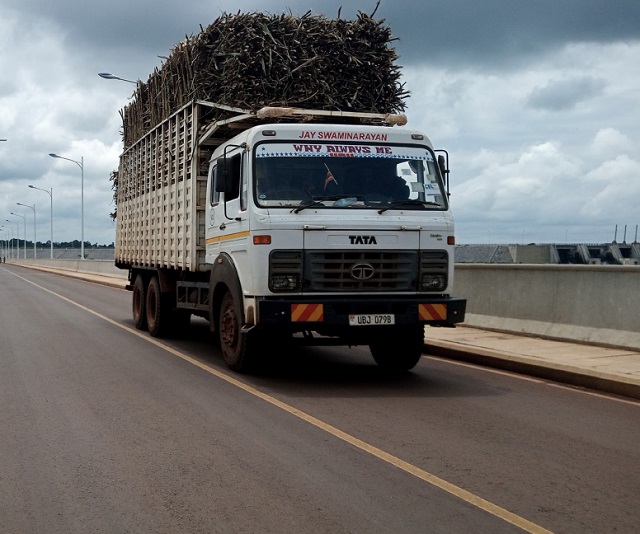
Back to activities around Isimba dam, the only main road that links the two districts has some patches of tarmac as it is still under construction. However, the upgraded road stops at the bridge, which has now replaced the outdated and unreliable ferry facility popularly known by the locals as Nabukeera serving the two districts.
From the dam’s construction site towards Busana Town Council, about 2 kilometres away, there is clear evidence that the dam has had an economic windfall.
Mawa Barasa, a hardware operator at Busana said the new dam sparked off the development of improved housing units and businesses.
“We no longer have dust here. We also now have new investments in housing and so the demand for cement is high,” he told The Independent in an interview.
“Majority of us now have electricity and this would not have been possible without the construction of Isimba dam.”
He added that it is now easier to move between Kamuli and Kampala via Kayunga due to improved road network and the new bridge. Mawa, however, says the new developments have also come with its own challenges.
“Prices of some products that we used to get from Busoga via the ferry such as maize flour and sugar have gone up. This is because traders now prefer to sell their products to us at ‘Kampala prices’ which is slightly higher than the previous one.” This, he says, is thanks to the good road.
Simon Anguyo, a taxi driver plying the Kayunga-Kamuli Road says whereas the road network connecting the two districts has improved and thus easing their movement, new taxis have also joined the route increasing the competition.
“We no longer inhale the dust as it used to be before. The travel time has also reduced by more than 50% and this is good for us and the passengers,” he said.
In northern Uganda, the areas hosting the Karuma Dam, have also recorded similar developments.
Jacob Ateenyi, a Member of Parliament for Kibanda South County in Kiryandongo District which hosts the dam besides Oyam and Nwoya Districts confirmed that indeed the social-economic status of some people there has improved.
“Karuma trading centre wasn’t like this. There’s a lot of businesses now, new towns have grown faster than the older ones, and I am sure that when the dam is completed and people have economic power, they will develop much faster,” he said.
“We are sure these (houses) are going to host a number of people when the dam is commissioned and will come with some money which will boost the economic status of this place. Some of them (workers) will remain, buy land and invest here, build houses and hotels.”
Ateenyi said some of their children have been employed in the dam construction and the lucky ones have been able to build houses and improve their lives.
Francis Okello, a business man at Karuma town dealing in beverage products reiterated that Karuma trading centre has had tremendous transformation since the dam construction began eight years ago.
“There was a lot of money here especially every end of the month,” he said, adding that he was able to buy a plot of land and build his home using proceeds from the booming business at the time.
Now, the country’s top tourism agency wants a share of the fortunes around the power dams. Lilly Ajarova, the chief executive officer at the Uganda Tourism Board (UTB) recently revealed that her organisation has since signed a memorandum with the Uganda Electricity Generation Company Limited (UEGCL), the government agency responsible for construction and management of the power dams, to transform the two dams into infrastructure tourism destinations.
“The successful development of Karuma and Isimba dams into tourism sites will further diversify our tourism portfolio and, therefore, contribute to our core objectives like sustainably increasing the volume and value of tourism to Uganda and by extension,” she said last month.
The post Chinese-built Hydro Power Dams appeared first on The Independent Uganda:.
from The Independent Uganda: https://ift.tt/3lUjYh1


0 Comments